Common Barriers and Risks Associated with Care Planning and How the DNS Can Support the Nursing Team
In this podcast, Amy Stewart, MSN, RN, DNS-MT, QCP-MT, RAC-MT, RAC-MTA, chief nursing officer for AAPACN, and Denise Winzeler, BSN, RN, LNHA, DNS-MT, QCP-MT, curriculum development specialist for AAPACN, discuss common barriers in the care planning process, the risks of delaying care plan updates, and how the director of nursing …

Sections K and O Assessment Periods

Effective Oct. 1, 2023, the Centers for Medicare & Medicaid Services (CMS) added columns for MDS items K0520 and O0110 to assess services provided “on admission” and “at discharge.” This change results in different assessment periods for these items depending on the assessment type(s). AAPACN’s Sections K and O Assessment …

Schizophrenia Audit Takeaways for NACs and the IDT

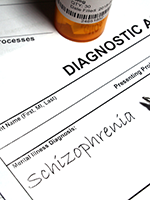
In the Jan. 18, 2023, Quality, Safety, and Oversight (QSO) memo QSO-23-05-NH, the Centers for Medicare & Medicaid Services (CMS) announced plans to conduct offsite audits to assess whether nursing homes appropriately assess, document, and code diagnoses captured in MDS item I6000 (Schizophrenia (e.g., Schizoaffective and Schizophreniform Disorders)) that are …

The Basics of Significant Change and What Has Changed

In this podcast, Amy Stewart, MSN, RN, DNS-MT, QCP-MT, RAC-MT, RAC-MTA, chief nursing officer for AAPACN, and Jennifer LaBay, RN, RAC-MT, RAC-MTA, QCP, CRC, curriculum development specialist with AAPACN, discuss some of the common concerns noted with Significant Change in Status Assessments (SCSAs).

Putting the Significant Change in Status Assessment Criteria into Clinical Practice

The Significant Change in Status Assessment (SCSA) has been a federal requirement since the inception of the Resident Assessment Instrument (RAI) process that resulted from the Omnibus Budget Reconciliation Act of 1987. The specifications of how to complete this assessment are described in chapter 2 of the RAI User’s Manual …

Stop and Read: Skilled Documentation Audit and Education Lessons for the NAC

Skilled nursing facilities (SNFs) are increasingly subject to skilled medical review audits from both fee-for-service Medicare (e.g., the SNF Five-Claim Probe and Educate initiative) and individual Medicare Advantage plans. Audit success ultimately hinges on documentation quality, but the presence of documentation in the medical record is no guarantee of the …

The Significant Change in Status Assessment: Key Issues Related to v1.18.11 and Beyond

The Significant Change in Status Assessment (SCSA) was not a major focus of the revisions in the Long-Term Care Facility Resident Assessment Instrument 3.0 User’s Manual v1.18.11. However, some of the v1.18.11 MDS coding changes could have an outsized impact on the SCSA process if nurse assessment coordinators (NACs) fail …

Relieving the Pressure of Coding Reopened Pressure Ulcers

In the updated Long-Term Care Facility Resident Assessment Instrument (RAI) 3.0 User’s Manual, v1.18.11, the Centers for Medicare & Medicaid Services (CMS) added several clarifications to help ease the pressure that nurse assessment coordinators (NACs) experience attempting to code section M accurately. Although strong clinical documentation of these wounds is …

Section M Pressure Ulcer/Injury: Algorithms for Present on Admission

Properly coding pressure ulcers or injuries can be tricky. AAPACN’s Section M Pressure Ulcer/Injury: Algorithms for Present on Admission helps guide the assessor on whether to code present on admission in variety of situations.     This AAPACN resource is copyright protected. AAPACN individual members may download or print one copy …

MDS v1.18.11 Is Here: How to Double-Check Efficiency for Long-Term Success

Now that the MDS version 1.18.11 item sets and the Long-Term Care Facility Resident Assessment Instrument 3.0 User’s Manual v1.18.11 are in play, there are still steps that nurse assessment coordinators can take to ensure that MDS processes are as efficient as possible under the new system. These include the …