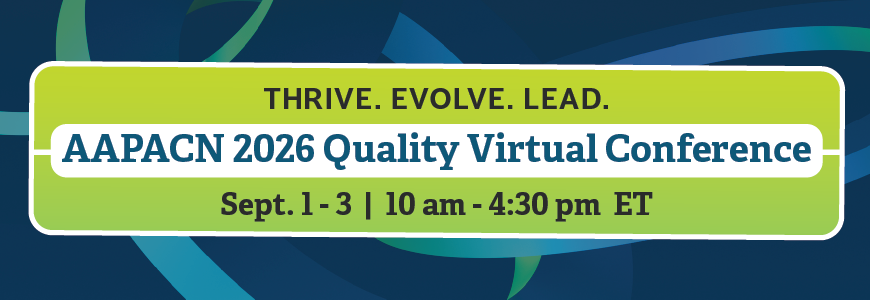
Wednesday, Sept. 2 – Day 2
*All times are listed in Eastern Daylight Time. This schedule is subject to change.
10 – 10:05 am | Welcome and Opening Remarks
10:05 – 11:20 am | 2.1 – AI in Long-Term Care: Revolutionizing Nursing Operations and Resident Outcomes
Judy Wilhide Brandt, RN, BA, RAC-MTA, RAC-MT, CPC, DNS-CT, QCP, Wilhide Consulting, Inc.
Long-term care nursing currently faces unprecedented operational pressures, driven by high patient-to-nurse ratios, regulatory overload, and traditional charting practices that consume 30 – 50% of a nurse’s shift. In this session, you will explore how artificial intelligence (AI) is transforming skilled nursing facilities by removing administrative friction and assisting the nursing department in achieving better resident outcomes. The speaker will break down the core fundamentals of AI—including Machine Learning and Natural Language Processing—and highlight their practical applications within clinical environments. You will discover next-generation AI charting solutions such as voice-to-chart, ambient AI, and predictive documentation tools that return valuable hours back to direct bedside care. You will also explore continuous AI-powered monitoring systems, predictive risk stratification for falls and hospital readmissions, and emerging R&D innovations like bio-impedance bedding and active robotic bed defenses. Additionally, navigate how to address early downsides to this technology, including alert fatigue, workflow integration barriers, and long-term adoption declines, to equip leadership with a balanced roadmap for successful clinical implementation. Following this session, you’ll be able to:
- Identify the key operational, compliance, and clinical risks within the current long-term care landscape caused by high patient-to-nurse ratios and extensive manual charting burdens
- Differentiate between core healthcare AI technologies, specifically Machine Learning and Natural Language Processing, and define their unique value propositions for clinical departments
- Evaluate AI-driven charting and documentation solutions, including voice-to-chart interfaces and passive ambient AI, to determine how they streamline workflow entry and eliminate error-prone records
- Analyze the impact of continuous AI monitoring tools, predictive risk stratification alerts, and upcoming R&D innovations on CMS Five-Star quality indicators and evolving value-based payment programs
- Outline clinical governance and implementation strategies designed to mitigate common AI barriers, such as alert fatigue, clinician burnout, and EHR interoperability gaps
11:35 am – 12:50 pm | 2.2 – Five Stars vs. One Star: How Facility Ratings Compare in the Data
Joel VanEaton, BSN, RN, RAC-CT, RAC-CTA, MT, MTA, Broad River Rehab
Consumers are tasked with interpreting the complex data that contributes to Five-Star ratings on Care Compare. During this session, the speaker will compare a one-star and five-star facility, including how differences may appear in the data versus actual on-site presentation. Following this session, you’ll be able to:
- Understand the three steps to the composite star rating
- Recognize the differences between a one-star vs. five-star facility on paper
- Discuss how to differentiate these facilities through actual facility data
- Summarize how to apply this information to facility quality improvement efforts and correct consumer education
12:50 – 1:45 pm | Afternoon Break
1:45 – 3 pm | 2.3 – Managed Care and the Impact of the All-Payer SNF QRP Program
Maureen McCarthy, RN, BS, RAC-MT, QCP-MT, DNS-MT, RAC-MTA, FACHCA, Celtic Consulting, AAPACN board member
Skilled Nursing Facility Quality Reporting Program (SNF QRP) continues to evolve, and the proposed all-payer expansion expected to impact the FY 2031 SNF QRP represents a significant operational shift for skilled nursing facilities (SNFs). Under the proposal, SNFs would be required to submit MDS data for residents receiving covered skilled care regardless of payer source, broadening quality reporting beyond traditional Medicare Part A residents. The Centers for Medicare & Medicaid Services (CMS) has identified MDS, National Healthcare Safety Network (NHSN), Medicare fee-for-service claims, and data validation as key data sources for the SNF QRP, and this proposed expansion would increase the importance of accurate, timely, and interdisciplinary documentation across payer types.
During this session, the speaker will explain the proposed SNF QRP all-payer changes and examine how expanded reporting may affect facility practices, quality measures, MDS completion, documentation workflows, IDT communication, and compliance oversight. You will explore when the OSCAR may be required, how expanded reporting expectations may affect admissions, therapy, nursing, social services, billing, medical records, and MDS processes, and what you should begin evaluating now to prepare for future implementation. The speaker will also highlight practical risks and opportunities, including increased assessment workload, payer identification challenges, missed or incomplete data elements, delayed documentation, software limitations, and inconsistent IDT communication.
You will leave with a clearer understanding of the proposed changes, the operational areas most likely to be affected, and early steps you can take to strengthen readiness before the new data is used for quality reporting, public reporting, or future performance evaluation. Following this session, you’ll be able to:
- Explain the proposed rule section for SNF QRP changes
- Identify potential payer sources for additional MDS consideration
- Explore the impact that OSCAR will have on the IDT
- Summarize options for process and system refinement
- Discuss how to prepare for potential pitfalls and opportunities
3:15 – 4:30 pm | 2.4 – Connecting the Dots: ICD-10-CM Accuracy and PDPM
Jennifer LaBay, RN, RAC-MT, RAC-MTA, CRC, AAPACN
Accurate ICD-10-CM coding and PDPM reimbursement begin with strong clinical documentation, assessment accuracy, and interdisciplinary collaboration. In this session, you will focus on the critical role ICD-10-CM coding plays in PDPM classification, reimbursement accuracy, and organizational performance.
Nurse assessment coordinators (NACs) will learn strategies to strengthen MDS assessment practices and accurately capture resident clinical complexity. Directors of nursing services (DNSs) will explore how nursing documentation, care planning, and clinical oversight directly influence coding accuracy and reimbursement outcomes. Nursing home administrators (NHAs) will gain insight into how accurate coding and reimbursement processes support financial stability, compliance, quality ratings, and resident-centered care.
Gain practical strategies to improve ICD-10-CM coding accuracy, optimize PDPM reimbursement, and align clinical, operational, and financial goals for organizational success. Following this session, you’ll be able to:
- Identify the impact of accurate ICD-10-CM coding on PDPM classification, reimbursement, and organizational performance
- Recognize documentation and assessment practices that support accurate coding and appropriate reimbursement under PDPM
- Describe the roles of the NAC, DNS, and NHA in promoting coding accuracy and reimbursement integrity
- Summarize strategies to strengthen interdisciplinary collaboration that supports accurate resident assessment, clinical documentation, and optimal PDPM reimbursement outcomes
Click through the buttons below for additional schedule information specific to each day of the AAPACN 2026 Quality Virtual Conference.